
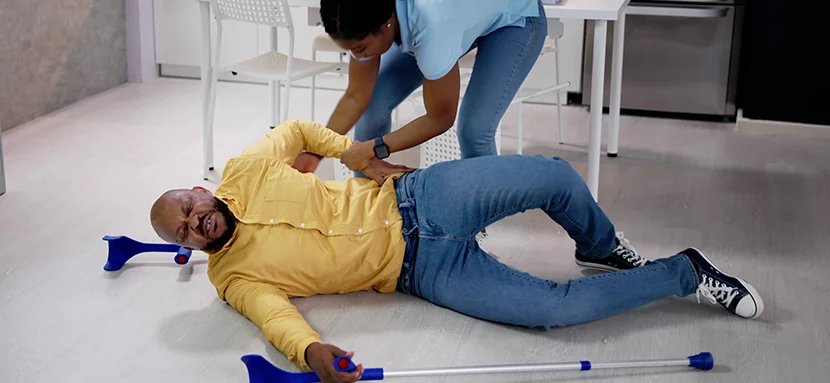
A fall takes two seconds. Proving what caused it can take months, and in Louisiana the law does not make that easy. Merchants here are not treated as insurers of customer safety.
So the evidence needed for a slip and fall claim has to answer specific legal questions. That is where a slip and fall attorney at The Marionneaux Law Firm, LLC can help sort out which facts actually move a claim forward.
What Louisiana Law Requires You to Prove After a Fall
Louisiana does not automatically hold a property owner responsible just because someone fell. If the fall happened inside a store, restaurant, or hotel lobby, Louisiana’s merchant liability law requires proof of three things. The condition had to be unreasonably dangerous, and the business created it or knew about it beforehand.
The business also had to fail to use reasonable care to fix it. Falls outside a retail setting, like on an apartment stairway or a parking lot owned by someone other than a merchant, usually fall under Louisiana’s general property liability rule instead.
The Evidence That Backs Up Each Element
Each piece of evidence usually supports only one specific element of Louisiana’s test.
- Photos of the hazard, taken before cleanup, support the unreasonable risk element.
- Surveillance footage showing how long the spill or debris sat there supports actual or constructive notice.
- The store’s own incident report can confirm the fall happened.
- Witness accounts from other customers can fill in gaps footage misses.
- Maintenance or inspection logs can show whether routine checks were actually being done.
Why Timing Decides Whether That Evidence Survives
Many commercial surveillance systems overwrite footage within a matter of weeks. Once that happens, the single clearest piece of notice evidence is often gone for good.
For injuries occurring on or after July 1, 2024, the two-year filing deadline runs from the date of the fall. Waiting also risks losing the footage, the witnesses, and the incident report before anyone asks a store to preserve them.
Medical Documentation That Ties Your Injury to the Fall
You still have to connect this fall to your injury. Emergency room records, follow-up visits, and any imaging done soon after the fall create a timeline that is hard to dispute later.
Gaps in treatment, or a long delay before seeing a doctor, give an insurer room to argue something else caused the injury. Keep a simple log of symptoms and appointments as they happen.
Frequently Asked Questions
What if the store cleaned up the hazard before I could take a photo?
You can still rely on other proof, such as the incident report, witness statements, or surveillance footage, even without your own photos.
Can I still have a claim if there were no witnesses?
Yes, a lack of witnesses does not automatically defeat a claim, though it does make other evidence more important. Surveillance footage, incident reports, and maintenance logs can establish the same facts a witness might have.
Does it matter if I was partly careless, like looking at my phone?
Louisiana applies comparative fault, which reduces compensation based on your share of responsibility. If you are found 51 percent or more at fault, you cannot recover damages.
Should I give a recorded statement to the store’s insurance company?
You are not required to give a recorded statement before speaking with someone about your situation. An early statement can affect what an insurer later offers you.
The Marionneaux Law Firm, LLC: Your Slip and Fall Law Firm
A fall in a Baton Rouge store or on someone else’s property leaves you dealing with pain, missed work, and a pile of questions about what to do next. Building a claim means lining up proof of the hazard, proof the business knew about it, and medical records that tie it to your injury.
Evidence like surveillance footage does not wait around, and neither does the filing deadline.
Contact our firm today to schedule a free consultation.