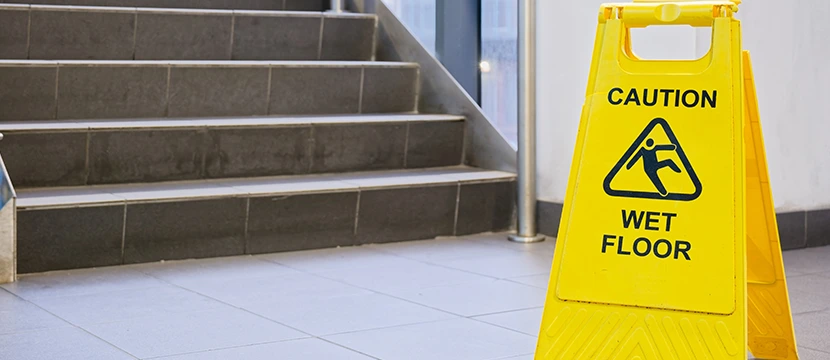
A fall on a wet grocery store floor, a dog bite at an apartment complex, or an assault in a dark parking lot can all raise the same question. Did the property owner keep the premises reasonably safe? Many people assume an injury on someone else’s property is automatically the owner’s fault.
But Louisiana law requires the injured person to show the owner knew, or reasonably should have known, about the danger and failed to fix it. We know how frightening and costly these injuries can be. At The Marionneaux Law Firm, LLC, Baton Rouge premises liability lawyer Rob Marionneaux Jr. has practiced personal injury law in Louisiana since 1995.
He previously chaired the Louisiana Senate’s Judiciary B Committee as a state senator. Reach out to talk through what happened and find out what your options may look like.

Property injuries in Baton Rouge show up in a lot of different settings, and the right legal approach depends on where the harm happened and who controlled that space. At The Marionneaux Law Firm, LLC, our Baton Rouge premises liability lawyers work with clients hurt in situations such as:
Some of these cases turn on a store’s own cleaning and inspection habits, while others turn on whether an apartment complex ignored a pattern of nearby crime. Either way, the first step is figuring out exactly what duty the property owner owed and whether that duty was met.
Louisiana does not treat a property owner as an automatic insurer of visitor safety. Under Louisiana Civil Code Article 2317.1, an owner or anyone who controls a building, parking lot, or walkway is only responsible for a dangerous condition under certain conditions.
They must have known, or reasonably should have known, about the hazard and had a chance to fix it or warn about it. This standard covers torn carpet, broken stairs, exposed wiring, standing water, and similar hazards, whether the property is a store, an apartment complex, or a private home.
If your fall happened inside a store or restaurant, a more specific rule applies. It asks whether the business itself created the hazard or had a reasonable amount of time to discover and clean it up before you fell.
Security-related injuries, like an assault in a poorly lit parking lot, instead focus on whether the owner took reasonable steps to prevent crime that was foreseeable. Louisiana also limits how long you have to sue. Under Louisiana Civil Code Article 3493.1, most personal injury claims carry a 2-year filing deadline that starts on the day you were hurt.
Missing that deadline can end your right to recover no matter how strong your case is.
Evidence in a premises liability case often disappears faster than people expect. Some stores and apartment complexes may overwrite surveillance video on a short cycle, and cleaning or inspection logs can be discarded as part of routine recordkeeping.
Witnesses move, memories fade, and the physical hazard itself, like a spill or a broken step, can be repaired within hours of an incident. That makes the early weeks after a fall or similar injury the most important window for gathering proof of what the property owner knew and when.
A written incident report taken at the time of the injury can also matter later. It often contains details about the condition of the property that are harder to reconstruct months afterward.
Proving a premises liability claim generally means piecing together what the property owner knew and when, often through incident reports, inspection or cleaning logs, and surveillance footage. Rob Marionneaux Jr. brings his own background to these cases, including membership in the Louisiana Association for Justice.
He has presented continuing legal education programs for other attorneys on handling cases involving serious injuries, including traumatic brain injuries. Over his career, he has tried cases to jury verdicts totaling more than half a billion dollars. Past results do not guarantee a similar outcome.
That background can matter in premises liability cases, where insurance companies may argue the hazard was open and obvious or that the injured person shares some of the blame.
A Baton Rouge premises liability lawyer at our firm can review the specific property, the hazard involved, and what the owner did or did not do to address it.
In most cases, you need to show the property owner knew, or reasonably should have known, about a dangerous condition and failed to fix it or warn you. You also have to show that hazard actually caused your injury, and the proof you need often depends on where the injury happened and who controlled that space.
Louisiana uses a comparative fault system, so being partly at fault does not automatically bar your claim. If your share of the fault is less than 51%, a court or jury can reduce your compensation by the percentage of fault assigned to you. You can still recover for the share that belongs to the property owner. For injuries on or after January 1, 2026, if you are found 51% or more at fault, you cannot recover at all.
Landlords can be responsible for injuries caused by defects they knew about or should have discovered, such as broken stairs, faulty wiring, or a malfunctioning security gate. Louisiana law can treat a landlord as a custodian of the building’s common areas and many structural features.
Yes, though not in the rigid way some other states sort visitors into categories. Louisiana generally asks whether your presence on the property was reasonably foreseeable to the owner. A person with permission to be there, whether as a customer, a guest, or a tenant, is typically owed a duty of reasonable care.
Get medical care, and if you are able, note where the fall happened, what caused it, and roughly when it occurred while the details are fresh. Photos of the hazard and the names of any staff you spoke with at the time can help later, even before you decide whether to pursue a claim. Keep your medical records, bills, and receipts, since they show the full cost of the injury.
The Marionneaux Law Firm, LLC offers a free consultation, so talking through what happened costs nothing upfront. Premises liability cases are commonly handled on a contingency basis, meaning the lawyer is typically paid from any recovery rather than by the hour.
Civil lawsuits arising in East Baton Rouge Parish, including most premises liability claims, generally fall under the original jurisdiction of the 19th Judicial District Court. It sits in downtown Baton Rouge at 300 North Boulevard. Very small claims may be handled differently depending on the amount at stake.
Not exactly. Claims against a city, parish, or state agency in Louisiana follow extra rules, such as a 90-day deadline to request service of the lawsuit on the government defendant. These situations need to be evaluated differently from the start.
Yes, a repair made after your injury does not erase the owner’s earlier responsibility. Louisiana courts generally do not allow evidence of later repairs to prove the owner was careless beforehand. That is why photos and reports from right after the incident matter more than the property’s condition afterward. If any of this sounds like your situation, contact us to schedule a free case evaluation and go over what happened.
A fall, a dog bite, or an assault on someone else’s property can leave you with medical bills and no clear answer about who is responsible. We can help you understand your next steps.
The Marionneaux Law Firm, LLC offers free consultations for people hurt on properties in and around Baton Rouge. Contact us today to schedule a free consultation and talk through what happened.
If you or someone you love was hurt because of someone else’s negligence, don’t navigate the insurance process alone. Call Marionneaux Law
Firm today for a free, no-obligation consultation with a Baton Rouge personal injury lawyer who will personally handle your case.

"*" indicates required fields
Copyright © 2026 Marionneaux Law Firm • All Rights Reserved.
Disclaimer
|
Site Map
|
Privacy Policy.
Digital Marketing By:

*Images are obtained under license from Canva and other third-party stock image providers, with attribution included where required.