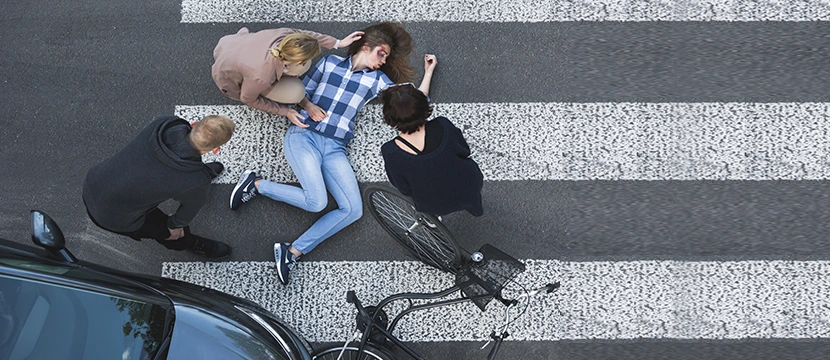
Louisiana law requires a driver to stop and yield to a pedestrian crossing in a marked or unmarked crosswalk whenever the signal is off or missing. That single driver duty decides fault in many Baton Rouge pedestrian crashes.
A driver who ignores it, or who passes a car already stopped for someone crossing, can be responsible for a broken hip, a head injury, or worse. We know how frightening this is while you’re still healing and the bills keep arriving. A Baton Rouge pedestrian accident lawyer at The Marionneaux Law Firm, LLC can look at what happened and explain where you stand.
Rob Marionneaux Jr. has practiced injury law in Louisiana since 1995. His jury verdicts total more than half a billion dollars over his career. Past results do not guarantee a similar outcome. Reach out to tell us what happened, and we’ll talk through what your options look like.

Pedestrian crashes happen in a lot of different ways, and the specific facts of yours often decide who is responsible and how much insurance coverage applies. At The Marionneaux Law Firm, LLC, we handle pedestrian injury claims that include:
Each of these situations raises its own questions about who was watching the road, what the driver could see, and what the pedestrian had a right to expect. A pedestrian accident lawyer looks at those details early, before memories fade and the physical evidence at the scene disappears.
A pedestrian hit by a car has no seatbelt or airbag to soften the impact, only skin and bone against metal and pavement. The injuries that follow, things like a shattered pelvis, a traumatic brain injury, or months in a wheelchair, tend to run more severe than what a typical two-car accident produces.
Louisiana law puts a clear duty on drivers. Under R.S. 32:212, a driver has to stop and yield to a pedestrian crossing within a marked or unmarked crosswalk whenever the signal isn’t working or isn’t there. A driver also can’t pass a car that has already stopped to let someone cross.
That duty doesn’t vanish just because you were a few feet outside the painted lines. Louisiana does reduce your compensation by your share of fault. For crashes on or after January 1, 2026, a person found 51% or more at fault cannot recover at all under Louisiana’s modified comparative fault rule.
The clock on your claim starts the day of the crash, too. Under Louisiana Civil Code Article 3493.1, you generally have two years from that date to file a lawsuit for your injuries. Missing that deadline can end your right to recover anything at all.
Documenting your medical care and preserving evidence early gives your claim a stronger start.
Rob Marionneaux Jr. has practiced injury law in Louisiana since 1995, and he has spoken at continuing legal education seminars on handling serious motor vehicle and traumatic brain injury cases. That kind of background matters because a pedestrian claim usually depends on several moving pieces coming together before a deadline runs out.
Building a pedestrian injury case generally means pulling the police report and any witness information. It also means requesting medical records that tie your treatment to the crash, and identifying every insurance policy that might apply. That can include a driver’s personal coverage or a commercial policy if a delivery vehicle or truck was involved.
It also means calculating the real cost of the injury, not just medical bills already paid, but the care you are likely to need later. When an insurer won’t offer a fair number, the claim has to be ready to go to court instead.
A Baton Rouge pedestrian accident lawyer with that background can put it to work on your case.
Pedestrian injury lawsuits in East Baton Rouge Parish are generally filed in the 19th Judicial District Court, located at 300 North Boulevard in downtown Baton Rouge. It serves as the parish’s trial court for civil claims, including personal injury cases that follow a crash on roads like Airline Highway, Florida Boulevard, or Government Street.
Filing in the right court, and naming the right defendants from the start, matters more than it might seem. A claim involving a city or parish vehicle, or an employee driving for a business, can carry separate notice rules. It can also carry a shorter window to act than a claim against an individual driver.
Sorting out who should be named, and where, is part of getting a pedestrian injury claim off to a solid start.
Get medical care first, even if you feel okay, since injuries like a concussion or internal bleeding don’t always show symptoms right away. Write down what you remember about the crash, including where you were crossing and what the driver did, while it’s still fresh in your mind. Keep any paperwork from the hospital or police in one place so it’s easy to find later.
The driver’s auto insurance typically covers your injuries if the driver was at fault. Many people also use their own health insurance or medical payments coverage while a claim is pending. Which coverage actually applies depends on the specific policies involved in your crash, since every situation is a little different.
Possibly, depending on your share of the blame. For crashes on or after January 1, 2026, Louisiana reduces your compensation by your percentage of fault if you are less than 51% responsible. It bars recovery entirely if you are 51% or more at fault. How fault gets divided depends heavily on the specific facts of where and how you were crossing the road.
Louisiana generally gives you two years from the date of the crash to file a lawsuit for your injuries, under the rule described above. Different deadlines or notice rules can apply if a government vehicle or agency is involved, so it helps to get your situation reviewed sooner rather than later.
A hit-and-run still leaves you with options. If the driver is later identified, their insurance may cover your claim. If they are never found, your own uninsured motorist coverage may step in to help with your losses instead.
It can affect how fault gets divided, but it doesn’t automatically end your claim. A driver still has to use reasonable care to avoid hitting a pedestrian anywhere on the road, even in a spot where the pedestrian also owed a duty to yield.
A personal injury lawsuit tied to a Baton Rouge pedestrian accident is typically filed in the 19th Judicial District Court on North Boulevard, the parish’s trial court for civil cases. Smaller claims may follow a different path, which is one reason it helps to have your case reviewed early.
An early offer is worth a second look before you accept it. Insurance companies often make an offer before the full extent of an injury is known. Once you accept and sign a release, you typically can’t go back and ask for more later.
A free consultation is a conversation about what happened, not a commitment to anything. We’ll listen to the details of your crash and explain what your options may look like from where you stand right now. Reach out whenever you’re ready to talk it through.
A pedestrian injury claim moves on a deadline, and the sooner the facts of your crash are gathered, the stronger your position tends to be. A Baton Rouge pedestrian accident lawyer at The Marionneaux Law Firm, LLC can go over the details with you and walk you through your next steps.
Contact us today for a free consultation.
If you or someone you love was hurt because of someone else’s negligence, don’t navigate the insurance process alone. Call Marionneaux Law
Firm today for a free, no-obligation consultation with a Baton Rouge personal injury lawyer who will personally handle your case.

"*" indicates required fields
Copyright © 2026 Marionneaux Law Firm • All Rights Reserved.
Disclaimer
|
Site Map
|
Privacy Policy.
Digital Marketing By:

*Images are obtained under license from Canva and other third-party stock image providers, with attribution included where required.